Xboom Stage 301 Specs, Features, and Value: Is it worth the price tag?
The LG Xboom Stage 301 arrived as an unconventional entrant in the audio space: a compact, wedge-shaped party speaker tuned in collaboration with will.i.am that blurs the line between portable party speaker and home sound system. This review-style article takes a detailed look at the Stage 301’s specifications, real-world performance, feature set, and value proposition. It is written for readers who want to understand how the product performs in everyday use—backyard gatherings, small live events, casual home theater, karaoke nights—and whether the asking price is justified by what it delivers.
Introduction
Many buyers heading into the speaker market ask the same pragmatic questions: How does it sound? Is it portable? Does it offer the connectivity and features I need for parties, TV, or live performance use? The Xboom Stage 301 aims to check multiple boxes at once—loudness, battery operation, lighting effects, mic/guitar inputs, app-driven DJ and karaoke modes, and a replaceable battery. It is important to recognize up front that the Stage 301 is not a conventional slim soundbar designed primarily for TV, but rather a multifunctional party speaker with some home‑audio capabilities. This distinction matters when assessing its value.
Technical specifications and key features
Below are the most relevant technical details that shape how the speaker performs and what buyers should expect in practice:
- Drivers: One larger woofer (approximately 6.5") plus two smaller midrange drivers—designed to produce a full mid-bass and clear mids for vocals and instruments.
- Power output: Rated for strong output suitable for medium-size spaces; manufacturer and spec aggregators quote peak/RMS-ready output in the neighborhood of the 100–120W class for the unit.
- Frequency response: Tuned to emphasize midrange clarity and party-friendly low end; nominal published response begins around 50 Hz up to 20 kHz.
- Connectivity: Bluetooth 5.4 with support for SBC and AAC, True Wireless Stereo (TWS) pairing, LG’s Party Link for multi-speaker syncing, and Auracast broadcast support; 3.5 mm aux-in plus mic/guitar inputs for live performance or karaoke.
- Wireless features & app: LG ThinQ app control for EQ, lighting modes, karaoke and DJ effects (pitch correction, DJ pad, scratch/loop effects), and speaker linking.
- Battery & power: Built-in rechargeable lithium-ion battery rated for up to roughly 10–12 hours of playback depending on volume and lighting; USB-C charging and a user-replaceable battery pack option.
- Design & durability: Wedge/standable housing with carry handle, tripod-mount compatibility, RGB lighting bars, and IPX4 splash resistance suitable for outdoor gatherings.
- Dimensions & weight: Compact footprint that’s larger than most pocket Bluetooth speakers but smaller than full-size party towers; weight in the mid-teens of pounds (roughly 6–7 kg), light enough to carry for short distances but not an ultra-light travel speaker.
- Extras: Karaoke/guitar input with dedicated effects, will.i.am tuning, replaceable battery, and multiple placement orientations (upright, tilted, or mounted).
Design and build: portable but purposeful
The Xboom Stage 301 uses a wedge-shaped chassis intended for flexibility: it can sit upright, lean back, or mount on a tripod. The finish and controls prioritize robustness and party-ready practicality—large control knobs and physical inputs for microphones and instruments sit alongside Bluetooth pairing and app-driven features. The integrated handle and replaceable battery reinforce the product’s portability angle, while the IPX4 splash rating means it tolerates light rain or splashes but is not designed for submersion or beach-buried use.
What buyers typically care about
- Durability: For outdoor or party use, spill and splash protection matters. IPX4 is adequate for most backyard or pool‑side scenarios if not submerged.
- Portability: The combination of weight, handle, and replaceable battery makes moving it between rooms or venues realistic for non-professional use.
- Controls and inputs: Physical mic/guitar inputs and clear front-panel controls are a plus for karaoke and impromptu performances.
Sound performance: what to expect in real-world listening
Sound quality is where practical listening impressions and raw specifications meet. The Stage 301 is tuned to prioritize a lively, crowd-pleasing presentation rather than audiophile neutrality. Observations from reviews and listening notes highlight the following traits:
Looking for the best Audio & Headphones deals on Amazon?
Browse Now →- Mids and vocal clarity: The speaker emphasizes midrange presence, which helps vocals, spoken word and acoustic instruments cut through in noisy environments—ideal for karaoke or DJ-hosted parties.
- Bass: The woofer provides muscular low-mid impact appropriate for pop, hip-hop and electronic music, but it will not match the deep, room-shaking extension of large dedicated subwoofers. In rooms where very low bass is important (home theater explosions, or sub-heavy EDM at club volumes), listeners may find the low end controlled rather than overwhelming.
- Treble and detail: Treble is serviceable and tuned to avoid harshness at high volumes; the result is a warm, forgiving top end that favors long listening sessions but might lack the crispness an analytical listener expects.
- Loudness and headroom: The Stage 301 is capable of filling small to medium outdoor gatherings and indoor parties with clean output at high volumes before distortion becomes noticeable.
- Latency and AV use: Bluetooth audio latency can be noticeable for video watching; for TV and movies an analog (AUX) or wired connection will offer better lip-sync performance.
Features that matter in practice
Beyond raw sound, the Stage 301 packs features that appeal to buyers who host or perform:
- Karaoke and live input: Mic and guitar inputs plus app-based vocal effects make it straightforward to turn the speaker into a small karaoke rig or a practice amp for acoustic performance.
- Lighting and ambiance: Integrated RGB lighting is customizable from the app and useful for party atmosphere; brightness and program modes affect battery life, so users should be mindful if they prioritize run time.
- Swappable battery: The replaceable battery is a practical advantage for long events or multi-day use—swap a charged spare instead of searching for outlets.
- Speaker linking: TWS and Party Link let users pair two compatible units for wider stereo or louder mono coverage, useful for larger gatherings.
Pros & Cons
- Pros
- Versatile design: portable with tripod-mount and multiple placement options.
- Good midrange clarity—strong vocals and instruments at party volumes.
- Replaceable battery and USB-C charging improve usability for extended events.
- Mic/guitar inputs, karaoke and DJ effects add real-world utility for hosts and performers.
- Bluetooth 5.4, TWS, Party Link and Auracast support modern wireless workflows.
- IPX4 splash resistance and durable build for casual outdoor use.
- Cons
- Bass depth is limited relative to full-sized party towers or separate subwoofers.
- Not a slim soundbar—limited suitability if the primary use is immersive TV/film audio.
- Bluetooth latency can impair lip-sync for video; wired input is preferable for movie-watching.
- App ecosystem can feel feature-rich but occasionally busy or cluttered for users who prefer simple controls.
- Weight and bulk are higher than small portable speakers, so it’s not ideal for ultralight travel.
How the Xboom Stage 301 compares (category-level table)
| Feature | Xboom Stage 301 | Typical compact soundbar | Typical portable party speaker |
|---|---|---|---|
| Form factor | Wedge-shaped portable party speaker—stand or tripod compatible | Long, slim chassis designed for TV placement | Tower or box-shaped with handle for portability |
| Primary use | Parties, karaoke, small live events, casual TV use | TV/movies, dialog clarity, room-filling stereo | Outdoor parties, portable DJ use, louder playback |
| Battery | Rechargeable, user-replaceable (10–12 hr typical) | Usually none (AC only) | Rechargeable, many with long runtime |
| Inputs | Bluetooth 5.4, aux-in, mic/guitar | Optical, HDMI ARC/eARC, Bluetooth | Bluetooth, aux-in, some with mic input |
| Water resistance | IPX4 (splash resistant) | Typically no IP rating | Varies; many models have IPX4–IPX7 |
| Lighting & extras | RGB party lights, DJ/karaoke effects | Minimal lighting; focus on sound processing | Often includes light shows and party modes |
| Best for | Hosts who need a multifunctional speaker: music, mic use, portability | Home theater enthusiasts focused on TV audio | Outdoor party-goers who prize loudness and portability |
Real-world use cases: who gets the most value
The Stage 301’s combination of features maps to several common buyer profiles:
- Casual hosts and backyard party organizers: The speaker’s loud, mid-forward sound signature, lighting, and DJ/karaoke features make it a one-box solution for small outdoor gatherings and backyard barbecues.
- Karaoke and small-performance users: Built-in mic/guitar inputs and vocal effects allow for impromptu sing-alongs and house‑band practice without extra hardware.
- Content creators and social hosts: For creators who need portable playback, a mic input and the ability to run battery-powered sessions, the Stage 301 is convenient for livestreams or small venue setups.
- Home users who want occasional TV use: It can serve as a secondary TV speaker for larger rooms where the built‑in TV audio is insufficient, provided users accept that it’s not optimized as a dedicated soundbar.
Buying guide: factors to weigh before purchasing
When considering the Xboom Stage 301, prospective buyers should evaluate the following points to determine whether it suits their needs and budget:
- Primary purpose: If the main goal is immersive home theater sound (wide soundstage, dedicated surround, deep sub-bass) a dedicated soundbar + subwoofer system will generally be better. The Stage 301 excels where portability, mic inputs, and party features matter most.
- Portability vs. weight: The unit is portable compared with furniture-sized speakers but heavier than compact Bluetooth speakers. Plan for how often it will be moved and whether a replaceable battery is a must-have.
- Battery runtime and charging: Typical runtimes of 10–12 hours can cover a full day of moderate use. Using lights and high volume reduces runtime—having a spare charged battery is the most reliable solution for long events.
- Connectivity needs: Bluetooth 5.4 and TWS/Party Link are modern conveniences; confirm you need or want wired inputs (mic/guitar) and assess whether you need HDMI/optical for TV. The Stage 301 lacks HDMI ARC/eARC found on most soundbars.
- Sound preferences: If the buyer prefers analytical, neutral sound for critical listening, other options tuned for fidelity will be preferable. If the goal is fun, punchy sound at parties, the Stage 301 is tuned appropriately.
- Outdoor use: IPX4 splash protection is good for light exposure but not heavy downpours or pool submersion. Also consider weather protection for electronics between uses.
- Budget and alternatives: The Stage 301 launched in a mid-range price band that positions it against both dedicated portable party speakers and higher-end Bluetooth systems. Compare features (battery replaceability, mic inputs, app ecosystem) when evaluating value against alternatives.
Value: is it worth the price tag?
Value assessment depends entirely on the buyer’s priorities. At its launch price in the mid-three-hundreds (price positioning common for feature-rich portable party speakers), the Stage 301 is compelling if the buyer values:
Find top-rated Audio & Headphones products at great prices.
View Offers →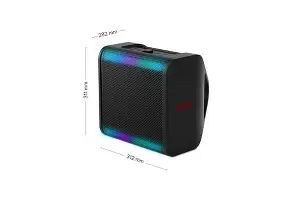
- Plug-and-play karaoke and live-mic capability without buying a mixer.
- Portability with a replaceable battery for long events or multi-day use.
- A single device that covers house parties, small performance needs, and occasional TV use.
For buyers whose priority is pure home theater performance—deep sub-bass extension, low-latency HDMI connections, and calibrated room DSP—the Stage 301 is not the optimal choice at any price. For social and multi-use scenarios, however, the Stage 301’s blend of loudness, features, and convenience tends to justify the mid-range price tag for many users.
Practical tips for getting the most out of the Stage 301
- Use wired input for TV and video: If watching movies, use aux-in to avoid Bluetooth latency and improve lip sync.
- Bring a spare battery for long events: If planning a full-day festival or long outdoor event, a second charged pack ensures continuous playback when lights and high volume draw more power.
- Placement and tripod mounting: Experiment with tilt/height (tripod mount) to find the best coverage—elevating the speaker improves vocal projection in crowds.
- Match source codecs carefully: For slightly better Bluetooth audio quality, prefer devices that stream AAC where supported.
- Use Party Link/TWS for larger spaces: Pairing two compatible speakers increases stereo width and overall SPL for bigger gatherings.
Conclusion
The LG Xboom Stage 301 is a versatile, feature-rich package aimed at people who host, perform, or want a single, portable unit that does more than play music. Its strengths—midrange clarity, practical mic/guitar inputs, replaceable battery, lighting, and app-driven party features—make it a very attractive choice for backyard parties, karaoke nights, small gigs, and content creators who need flexibility. It is less compelling as a primary home theater soundbar, where HDMI audio features and deep bass extension typically dominate buying decisions.
For buyers who value multifunctionality, portability, and party-focused features, the Stage 301 offers strong real‑world utility that often justifies its mid-range price. For listeners seeking reference-grade fidelity or a dedicated TV sound solution, evaluating a specialized soundbar or a speaker-plus-subwoofer system would be a better use of budget. Ultimately, whether the Xboom Stage 301 is “worth it” depends on which side of that trade-off—party versatility versus dedicated fidelity—the buyer stands.